Sweet Spot
1.
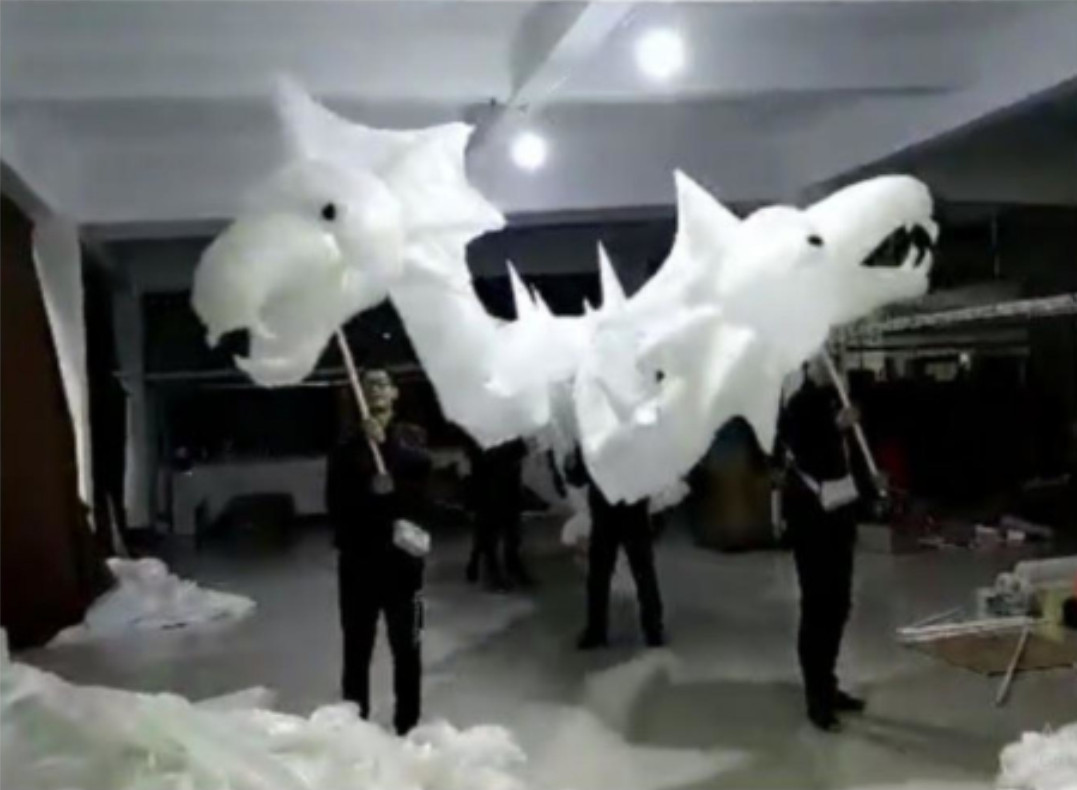
Global Capital is a dragon devouring itself, following a hunger for self-equilibration. Its legacy follows the dragon's head as it devours its guts, spilling from a stomach cut open by the scattered shards of an unbounded culture.
Somewhere else, someone is always discovering vaporwave for the first time. The confluence of universal asynchronous accessibility and low distribution costs means that an aesthetic can never die. Trends from disparate historical moments and locations are flattened into a source pool, then endlessly re-combined in a terrain of accelerated production and consumer desire.
In China - the womb of production for the material totems of our manufactured desires - forms and genres are successively indexed, dehistoricized, and pushed to the point of visual hyperbole. Microtrends are run to the ground as husks with no fruit save their orientation towards oblivion - there is always a price paid for satiating our desires.
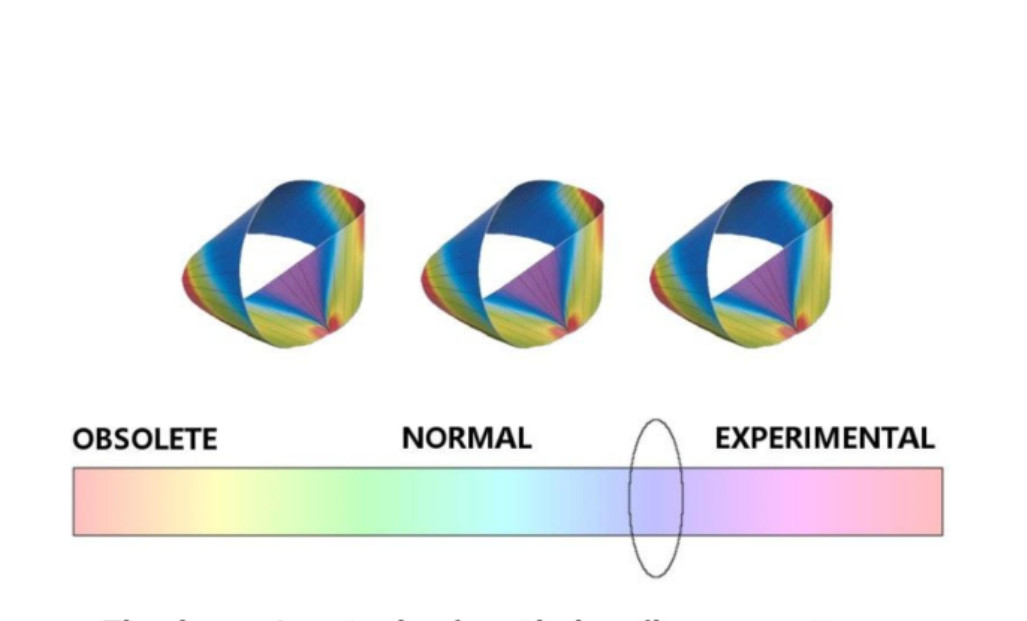
The dragon's autophagic path describes a spectrum moving incrementally from obsolete to experimental. Widely recognizable forms on one end, uncommon forms on the other; the former operates via the reinforcement of demographic tropes. The latter is fresh roadkill, experimental territory yet to be processed by the mainstream meat market. Those who manage to formalize the experimental as a product are on the advantageous side of the cutting edge, existing in a sweet spot between normal and experimental.
This spectrum of obsolete/normal/experimental coheres as a mobius strip; each moment on the timeline is like a twist, a point in which the flattened source pool is formalized, signifying a position in relation to legibility.
2.
The dragon's tail is the obsolete of technocapitalism. The predominant style is 'Laotu': earthy and old-fashioned. Laotu is a primordial soup of trend signposts amidst the hyper-accelerated development which is concentrated in showpiece cities.
In the Landfill of the Real, style is accidental: a cloud of demographic associations, strung together by automatons. A ghost in the shell unaware of its death, an authority which dwindles in its feeble platitudes of sincerity - despite being supported by impersonal machine processes. Laotu manifests as a nostalgia staining the algorithmization of design with the spoilt milk of human kindness. Motivational quotes, moral truisms, exaggerated patriotism plastered on wechat stickers and advertising: all is drowned in perfunctory aesthetics.
3.
The next form emerges on the path of least resistance towards aestheticized technocracy - slightly more current than Laotu, but still obsolete in its attempt to equilibrate space and time.
Maker culture was progressively administered to legitimize and control low-end electronic malls populated by senior peddlers and repairmen, as well as factories pirating technology. Manufacturing loopholes were rebranded as savvy uberization, neutralizing their efficacy when the first tier became oversaturated by makerspaces. This resulted in an aesthetics based on the busywork shell of productivity, innovation, and progress.
Shanzhai the art of the copy attempts to localize the consequences of scattered logistics, legitimizing fractured slogans and mutated forms as a lyricism of city life. Sinofuturism describes contemporary China through a revisionist futurism that inverts techno-orientalism. Its inversions reclaim ethnic stereotypes as the apex of neoliberalism. Modular, techno-fetishistic forms resembling the fixity of Chinese grammar disguise nostalgia as consumable genre fictions, speculating on a reality which it inoculates itself from. Post-fordist complexifications of desire are relegated to the depthless totality of ornamental multimedia. Nouveau riche vulgarity and amateur prosumerism are dissected and placed back in circulation.
The Moderate Obsolete subsumes the atomization of forms in glossy maximalism - empty growth decorating GDP reports, a bubbly froth of of fragments rendered continuous on a 3D simulated surface terrain. It repackages a million parts frozen within the semblance of a machine.
4.
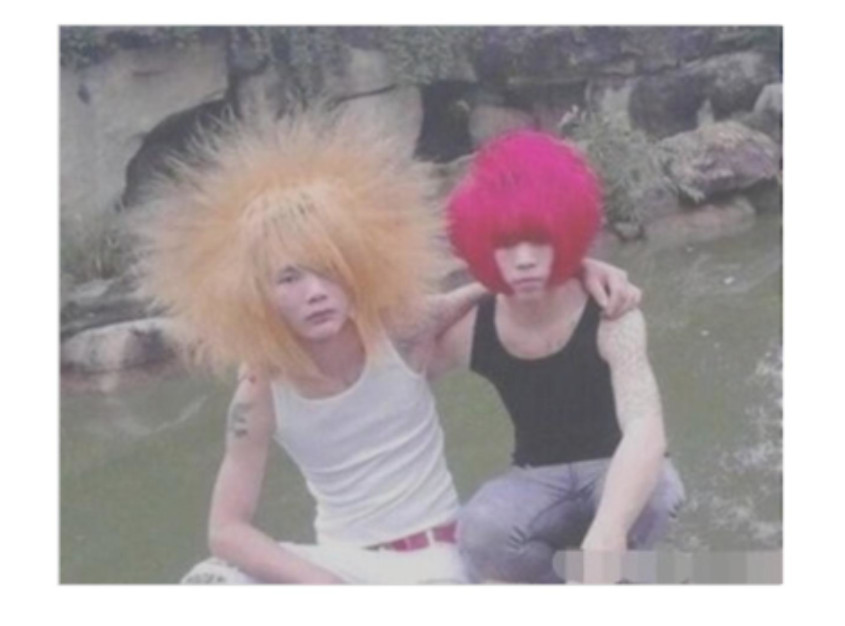
'Samate', homonym for 'smart', denotes a subculture characterized by non-integration. Drawing from emo and visual kei, Samate appears derivative to the point of absurdity - even to a mainstream inundated with generic and appropriative forms. Stopping short at producing coherent icons of globalization, Samate deconstructs and represents objects of subcultural kitsch. With the internet's all-access pass to every nook and cranny of culture across space and time, Samate gains a second wind in the lungs of first-tier city dwellers; eerie frog parts hinting at the prior creature.
5.
Normative aesthetics are wavering. The obsolete tail is resolutely monolithic, the "normal" is constantly vulnerable to fluctuations of material coordinates. It performs formalizations varying in pace and shape, relative to regional infrastructures and their role in global capital.
First-tier cities - Beijing, Shanghai, Guangzhou, Shenzhen - are always on the defensive towards premonitions of their hype bubble bursting. Novel forms are produced within the mainstream as a measure against liquidation. Pasted like decals over the cracks and fissures of global techno-capital, the normal is more preservationist than innovative. It is preoccupied with patching holes in its visual currency pool.
In the hermeneutic of globalized capital, European cities have turned back to the rural, scratchy and occultic - whereas the same motifs, when developed in Shanghai's heart of skyscraper-dotted development districts and accelerated manufacturing, tend toward the angular, plastic, and hyper-modern, reinforcing the first tier while ventriloquizing a displaced eulogy to its obsolescence.
Quotidian but highly unstable, normative aesthetics represent the damage control lever of global market conditions striving for equilibrium.
5.
In the sweet spot of cultural production, novel forms cohere for visibility, but are not yet subsumed into the mainstream banal. They properly anticipate a motion of manufactured authenticity, an exodus back to the small cities and towns from which first tier creative labourers came, closer to the womb of industry and logistics that fuel commodity-driven trends - back to the roots of factory cities, ghost towns, and development zones.
The past catches up with the past in the material Real, situating the present at the brink of collapse. An infinite cloud of cultural essences and auras are milked, bottled, and immediately deadstocked - always already existing within a flattened source pool, always already bled dry. The horror vacui of ruins and landfills surround the amateur model at the end of his selfie stick - flaunting niche clothing as the world around him disintegrates.
Moderate experimental fully assumes the coordinates of being the last aesthetic movement prior to environmental collapse, before the dragon swallows itself whole. This is an aesthetic realm bearing a million objects for every micro-trend, the wheels of production hydroplaning on the bottomless glass lake of consumer desire.
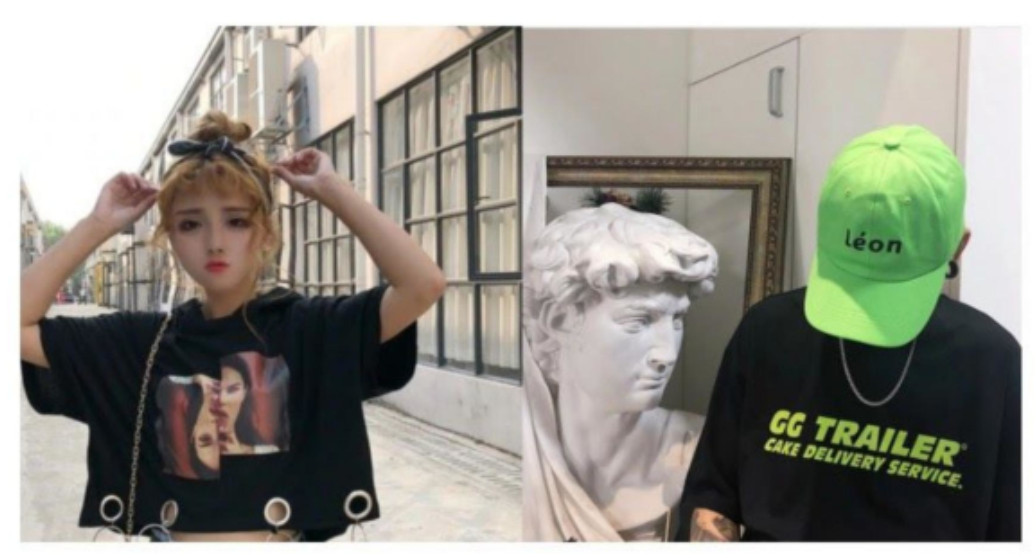
The aliexpress harajuku shop is today's sub-tier equivalent of the family-owned fruit stall. Total masks of meitu filters, awkward angles, and documentation of ultra fast fashion in home-business settings is peddled by the warehouseful to first-tier youths.
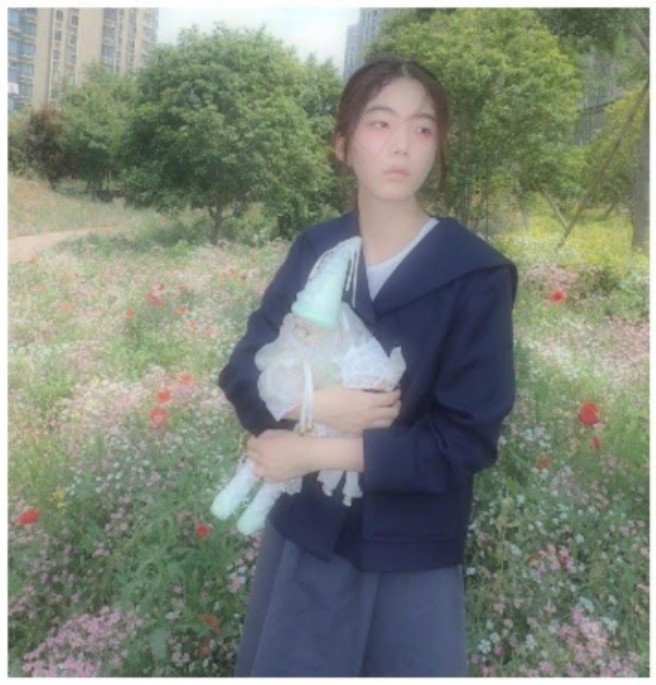
Dependent upon such outlets is International-School Wave (ISW), a style characterized by the cross-pollination of local and international cultures by school-aged power users to whom heavily mediated internet presences are the norm. As a niche fashion rendered uncanny by the unconscious of accelerationism, the subjects of ISW purchase and model readymade taobao combinations in succession at rapidfire speed, expressing the boundless desires of upwardly-mobile and migration-aspirant classes from all localities in China.
In this scheme, both material logistics and virtual trends are accelerated to a point where they actually undo themselves, grounded only by the universal unconscious. ISW produces forms that should prove unrecognizable but, yet cohere as such. Subjects are individuated through etiolation, producing an impossibly fashionable form.
6.
Just over 15 years ago, Alain Badiou proposed 15 theses on contemporary art, warning artists to avoid fixating on the infinite production of novelty. Instead, he invoked the desire for precise modes of production in service of a new universality, against the universality that globalization forces upon us. Badiou deemphasized the notion of art as the infinite realization of possibilities following the latter, beseeching artists to be vigilant towards the truth implicit in this position - that it is impossible to think of new possibilities outside global capitalism.
Because culture is sustained by the production of inexhaustible micro-variations in the deadstock pool, one defaults to an ethos of experimentation, not through formal innovation, but through the exhaustion of novelty. Following the corpus of a runaway general intellect, every clustered virtuality drawn from the source pool subjects our being to irreversible abstraction.
The myth of culture has finally spiralled into the groundless ground secretly desired by the postmodern ideologues of culture itself. The form it takes, the Becoming-AI, is its infinitely replicable mascot. The Becoming-AI -- the cybernetic silhouette swarm of the young, casually augmented Chinese Girl - is the transcendence of global abstraction.
Becoming-AI is the tending-toward of absolute techne and techne as prayer. It is the army of post-post-whatevergoth ravers bringing down the Jericho walls of Haraway's post-anthropocene daydreams (they were still dialectically humanist fantasies, after all). It is 100000000000 hyper-airbrushed images proliferating on the Chinese Internet, it is a mass of digital deepfake CCRU golems, it is Walter Benjamin's angelus novus with print-on-demand wings.
The Becoming-AI is already here at the edge of an impossible future. Will you hold its hand in the solar eclipse?
Global Capital is a dragon devouring itself, following a hunger for self-equilibration. Its legacy follows the dragon's head as it devours its guts, spilling from a stomach cut open by the scattered shards of an unbounded culture.
Somewhere else, someone is always discovering vaporwave for the first time. The confluence of universal asynchronous accessibility and low distribution costs means that an aesthetic can never die. Trends from disparate historical moments and locations are flattened into a source pool, then endlessly re-combined in a terrain of accelerated production and consumer desire.
In China - the womb of production for the material totems of our manufactured desires - forms and genres are successively indexed, dehistoricized, and pushed to the point of visual hyperbole. Microtrends are run to the ground as husks with no fruit save their orientation towards oblivion - there is always a price paid for satiating our desires.
The dragon's autophagic path describes a spectrum moving incrementally from obsolete to experimental. Widely recognizable forms on one end, uncommon forms on the other; the former operates via the reinforcement of demographic tropes. The latter is fresh roadkill, experimental territory yet to be processed by the mainstream meat market. Those who manage to formalize the experimental as a product are on the advantageous side of the cutting edge, existing in a sweet spot between normal and experimental.
This spectrum of obsolete/normal/experimental coheres as a mobius strip; each moment on the timeline is like a twist, a point in which the flattened source pool is formalized, signifying a position in relation to legibility.
2.
The dragon's tail is the obsolete of technocapitalism. The predominant style is 'Laotu': earthy and old-fashioned. Laotu is a primordial soup of trend signposts amidst the hyper-accelerated development which is concentrated in showpiece cities.
In the Landfill of the Real, style is accidental: a cloud of demographic associations, strung together by automatons. A ghost in the shell unaware of its death, an authority which dwindles in its feeble platitudes of sincerity - despite being supported by impersonal machine processes. Laotu manifests as a nostalgia staining the algorithmization of design with the spoilt milk of human kindness. Motivational quotes, moral truisms, exaggerated patriotism plastered on wechat stickers and advertising: all is drowned in perfunctory aesthetics.
3.
The next form emerges on the path of least resistance towards aestheticized technocracy - slightly more current than Laotu, but still obsolete in its attempt to equilibrate space and time.
Maker culture was progressively administered to legitimize and control low-end electronic malls populated by senior peddlers and repairmen, as well as factories pirating technology. Manufacturing loopholes were rebranded as savvy uberization, neutralizing their efficacy when the first tier became oversaturated by makerspaces. This resulted in an aesthetics based on the busywork shell of productivity, innovation, and progress.
Shanzhai the art of the copy attempts to localize the consequences of scattered logistics, legitimizing fractured slogans and mutated forms as a lyricism of city life. Sinofuturism describes contemporary China through a revisionist futurism that inverts techno-orientalism. Its inversions reclaim ethnic stereotypes as the apex of neoliberalism. Modular, techno-fetishistic forms resembling the fixity of Chinese grammar disguise nostalgia as consumable genre fictions, speculating on a reality which it inoculates itself from. Post-fordist complexifications of desire are relegated to the depthless totality of ornamental multimedia. Nouveau riche vulgarity and amateur prosumerism are dissected and placed back in circulation.
The Moderate Obsolete subsumes the atomization of forms in glossy maximalism - empty growth decorating GDP reports, a bubbly froth of of fragments rendered continuous on a 3D simulated surface terrain. It repackages a million parts frozen within the semblance of a machine.
4.
'Samate', homonym for 'smart', denotes a subculture characterized by non-integration. Drawing from emo and visual kei, Samate appears derivative to the point of absurdity - even to a mainstream inundated with generic and appropriative forms. Stopping short at producing coherent icons of globalization, Samate deconstructs and represents objects of subcultural kitsch. With the internet's all-access pass to every nook and cranny of culture across space and time, Samate gains a second wind in the lungs of first-tier city dwellers; eerie frog parts hinting at the prior creature.
5.
Normative aesthetics are wavering. The obsolete tail is resolutely monolithic, the "normal" is constantly vulnerable to fluctuations of material coordinates. It performs formalizations varying in pace and shape, relative to regional infrastructures and their role in global capital.
First-tier cities - Beijing, Shanghai, Guangzhou, Shenzhen - are always on the defensive towards premonitions of their hype bubble bursting. Novel forms are produced within the mainstream as a measure against liquidation. Pasted like decals over the cracks and fissures of global techno-capital, the normal is more preservationist than innovative. It is preoccupied with patching holes in its visual currency pool.
In the hermeneutic of globalized capital, European cities have turned back to the rural, scratchy and occultic - whereas the same motifs, when developed in Shanghai's heart of skyscraper-dotted development districts and accelerated manufacturing, tend toward the angular, plastic, and hyper-modern, reinforcing the first tier while ventriloquizing a displaced eulogy to its obsolescence.
Quotidian but highly unstable, normative aesthetics represent the damage control lever of global market conditions striving for equilibrium.
5.
In the sweet spot of cultural production, novel forms cohere for visibility, but are not yet subsumed into the mainstream banal. They properly anticipate a motion of manufactured authenticity, an exodus back to the small cities and towns from which first tier creative labourers came, closer to the womb of industry and logistics that fuel commodity-driven trends - back to the roots of factory cities, ghost towns, and development zones.
The past catches up with the past in the material Real, situating the present at the brink of collapse. An infinite cloud of cultural essences and auras are milked, bottled, and immediately deadstocked - always already existing within a flattened source pool, always already bled dry. The horror vacui of ruins and landfills surround the amateur model at the end of his selfie stick - flaunting niche clothing as the world around him disintegrates.
Moderate experimental fully assumes the coordinates of being the last aesthetic movement prior to environmental collapse, before the dragon swallows itself whole. This is an aesthetic realm bearing a million objects for every micro-trend, the wheels of production hydroplaning on the bottomless glass lake of consumer desire.
The aliexpress harajuku shop is today's sub-tier equivalent of the family-owned fruit stall. Total masks of meitu filters, awkward angles, and documentation of ultra fast fashion in home-business settings is peddled by the warehouseful to first-tier youths.
Dependent upon such outlets is International-School Wave (ISW), a style characterized by the cross-pollination of local and international cultures by school-aged power users to whom heavily mediated internet presences are the norm. As a niche fashion rendered uncanny by the unconscious of accelerationism, the subjects of ISW purchase and model readymade taobao combinations in succession at rapidfire speed, expressing the boundless desires of upwardly-mobile and migration-aspirant classes from all localities in China.
In this scheme, both material logistics and virtual trends are accelerated to a point where they actually undo themselves, grounded only by the universal unconscious. ISW produces forms that should prove unrecognizable but, yet cohere as such. Subjects are individuated through etiolation, producing an impossibly fashionable form.
6.
Just over 15 years ago, Alain Badiou proposed 15 theses on contemporary art, warning artists to avoid fixating on the infinite production of novelty. Instead, he invoked the desire for precise modes of production in service of a new universality, against the universality that globalization forces upon us. Badiou deemphasized the notion of art as the infinite realization of possibilities following the latter, beseeching artists to be vigilant towards the truth implicit in this position - that it is impossible to think of new possibilities outside global capitalism.
Because culture is sustained by the production of inexhaustible micro-variations in the deadstock pool, one defaults to an ethos of experimentation, not through formal innovation, but through the exhaustion of novelty. Following the corpus of a runaway general intellect, every clustered virtuality drawn from the source pool subjects our being to irreversible abstraction.
The myth of culture has finally spiralled into the groundless ground secretly desired by the postmodern ideologues of culture itself. The form it takes, the Becoming-AI, is its infinitely replicable mascot. The Becoming-AI -- the cybernetic silhouette swarm of the young, casually augmented Chinese Girl - is the transcendence of global abstraction.
Becoming-AI is the tending-toward of absolute techne and techne as prayer. It is the army of post-post-whatevergoth ravers bringing down the Jericho walls of Haraway's post-anthropocene daydreams (they were still dialectically humanist fantasies, after all). It is 100000000000 hyper-airbrushed images proliferating on the Chinese Internet, it is a mass of digital deepfake CCRU golems, it is Walter Benjamin's angelus novus with print-on-demand wings.
The Becoming-AI is already here at the edge of an impossible future. Will you hold its hand in the solar eclipse?