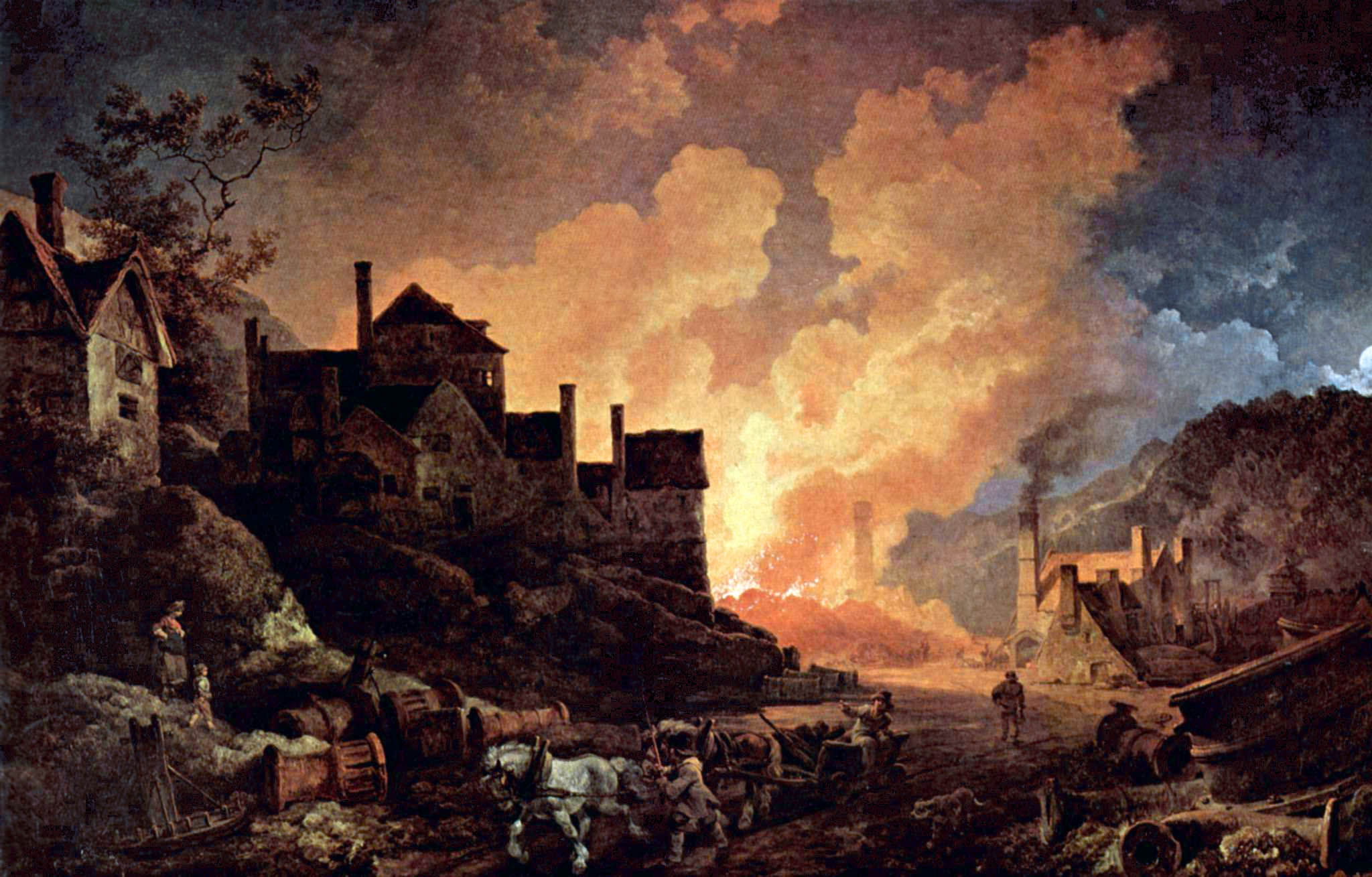
The word “crisis” comes from the root krei-, meaning to sieve or distinguish. In ancient Greek it evolved into krisis - spoken in a medical sense by Galen and Hippocrates as the turning-point in a disease, an event from which either recovery or death ensues. It was spoken as krinein by Aristotle, referred to variously as a critical moment in decision-making, as a function of parsing perception and belief, and of making decisions of taste in the realm of aesthetics. The Latinized crisis came to connote a point at which change must come (for good or for ill), bearing relation to kairos and its sense of timeliness, of time, of present danger and its saving grace; kairos is extra-ordinary time, crisis-time.
In the contemporary world, crisis is spoken as a condition of unrest where structures previously thought to be stable and immutable suddenly give way and present challenges to the belief-systems and customs which they carry. This is often marked by geopolitics and class. As a simple example, when I was a child I lived in a township that had electricity for only a few hours each day. This rhythm wasn’t felt as a crisis; but a similar reduction of electrical service in an urban center would prompt disaster. In this sense, crisis often serves to reveal inherent presumptions (such as those of rights and standards, of belonging, of what constitutes living well, or being a legitimate subject) and implicit values within a given habitus. This can be seen within the globalized cityscape itself as well as within the cultural industries. The more accellerated an infrastructure becomes - the more it presumes specific conditions of techne, morality, and lifestyle to be transcendental - the more crisis functions as a turning point or a revelation.
Each in their turn, systems of Feudalist enclosure, Enlightenment ideology, industrial production and the cybernetic Real have encouraged beliefs in ideas like dynasty, permanence, the individual, accelleration, fungibility and progress as essential values. Such values present crisis as an overwhelming force, alien to humans, which is possible to contain, suppress, or control through human activity. The preservation of lineage and wealth within family dynasties, the concentration of enduring business interests, the man-made dialectic of man and nature, the construction of seemingly airtight systems of social and economic control - all of these are threatened by crisis, threatened to be revealed as non-transcendental constructions which have always relied on belief in order to exist at all.
The scope of enclosure always expands as civilizations accellerate. Identities, avatars, aesthetics, workers, lovers and ideologies have become increasingly fungible; any posit of an existence 'outside' alienation simply draws a new coordinate into its glass dome. Our present world has incorporated the thanatos-high of crisis-as-catastrophe, thriving on continual cascades of collapse and reconstruction, like those ghost-complexes common on the outskirts of mid-tier cities where speculative real estate projects are demolished mid-completion only to be built up again, where profit mysteriously pools at the top by running the gears of capital with as little grist as possible. The extractive industries court crisis-as-power as they enclose, challenge forth, sort and refine selective elements into the materials that uphold interlocking chains of logistics, ideology and subject-formation. Media and globalization thrive on crisis-as-composite, developing subjects as atomized and interchangeable components enclosed within the overlapping forces of everyday reality.

In the trajectory by which human activity came to be regulated by cyclical time, linear time and the infinitely-cascading time of the present, the apocalypse has always demarcated moments in which one existing and axial system is, or threatens to be, supplanted by another. From the Permian extinction and the Justinian plagues, to 1816’s Year without a Summer and the great Solar Storm of 1859, to the God-forsaken badlands of early modernity and the numerous catastrophes we face today, the “end times” are eternal times - the eternally prophesied, the endlessly rising and falling sine wave of re-organizing the conditions by which we define the possibility of existence and the values by which it is governed.
When crisis comes in the form of politics, it’s usually referred to as terror - the threat of an alterity so totalizing that life as one knows it seems utterly threatened - whereas the apocalypse is usually spoken in the language of religion. In both cases, the fantasy of a time of great reckoning assumes a baseline humanism in the elevation of (particularized) human life it implies alongside the horror of its diminution. The classical extinction-romance developed long before contemporary climate change became a topic, and it implicitly requires a ground of stable humanist values to underscore its cosmic horror. Extinction and the death of Nature are Romantic preoccupations; the idea of Earth as a “sepulch’ral clodde,” where the “Suns eye castes its sickly glare,” carries a thundering poetic power wherein the poet Thomas Campbell expounds the end of the Adamic bloodline. Marx's declaration “All that is solid melts into air / all that is holy is profaned” is only the brittle remainder of that dire and brilliant transformation in which:
"...all worldly shapes shall melt in gloom
The Sun himself must die, Before this mortal shall assume // Its Immortality"
The failure of the late romantic era was its innate legacy of humanist values which made it politically insupportable; its aporia is that only romance can redeem the purely political. As a Grand Narrative, the Apocalypse is a man-made, terraced monolith by which the regulatory doxa of a given ruling class performs the ultimate spiritual bypass toward forces that threaten to overtake it. Yet in localized and intimate expressions of crisis and transformation, we find a relentless Eros that overturns the limitations of both the individual and communal fantasies. The Anthropocene itself is not opposed to Nature; rather, as explained by Timothy Morton in his Dark Ecology, the Anthropocene is "Nature in its toxic nightmare form", waiting to emerge as catastrophe; the sad passions cultivated within its moments of relative calm may be the base metal of a lyrical alchemy.
Byron’s poem “Darkness”, written during the Year Without a Summer is a dream of the Sun blotting out from the sky and of the moments of its aftermath. This work draws its force from depletion; the humans who survive the solar crisis begin to burn everything - their cities, their belongings and their forests - in order to beat back the darkness, gestures which of course only hasten it. Similarly, the poem itself seemed to realize that it must actually consume the very ground that makes poetry possible; the resources for articulation are themselves heaped upon the flames, a final potlatch before the Great Darkness pervades.
It is in this “dark background of existence”, where all encounters are present within an abyssal alterity. This is where lyricism builds. Beyond the intricate taxonomies of monstrous gods, beyond the epic quests and even the exhilarating sense of acceleration through time, we come upon the lyrical space:
And beyond the fire-holes, was the great Shine, that lay from the West unto the North of all that Land; and, in verity, we did not need that Greatness, so that we come not nigh to it.
And the way of our journey was that we come clear through all unseemly danger unto Mine Own. And surely this truth told me so much of terror that I was half in a wonder that ever I did live in the end to come unto it."
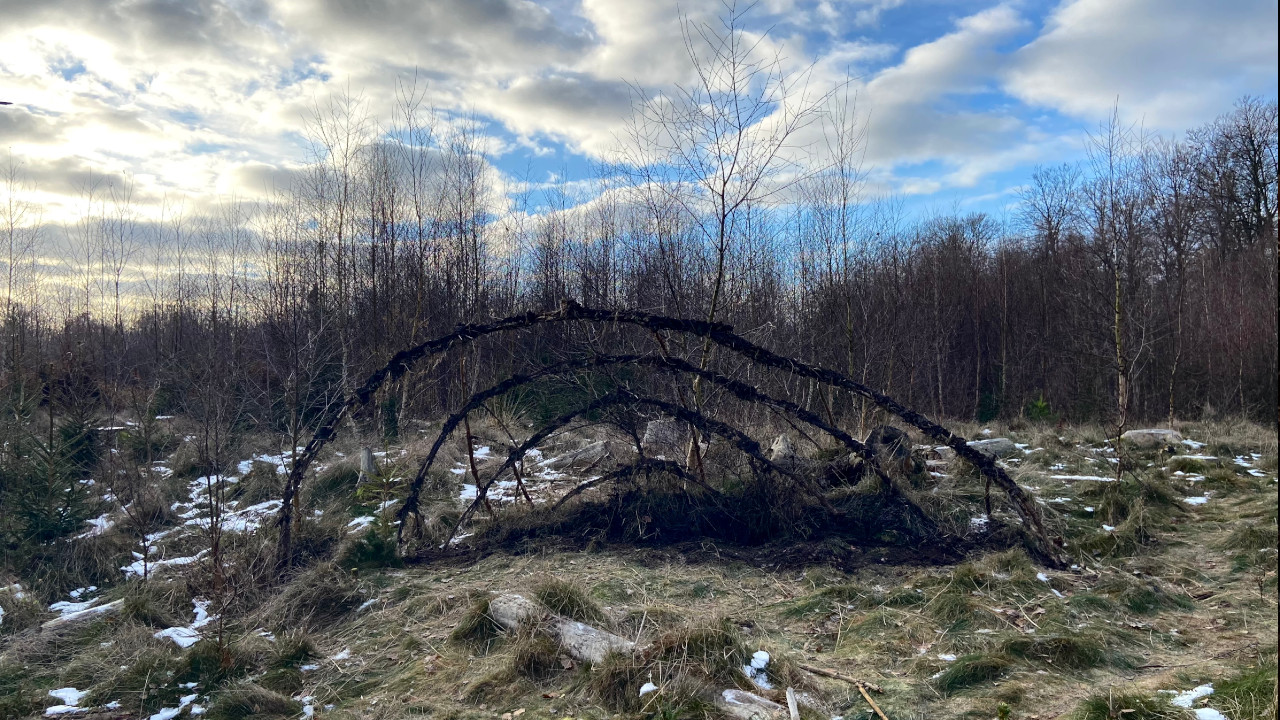
Gothic Pastoral iii
Crisiscore is guided by these "little fire-holes" of lyricism. It stands as an expression of one’s ownmost, having passed by the established narratives and common temptations of history. The process of co-constructing meshworks to hold the poetry of our singular experiences is the process of centering lyricism within a community, where "the most abstract dream and the most tangible reality come into contact with each other”. Resisting the values of both preservationist dynasties and technocapitalist progress, unable to retreat into fantasies of primitivism nor place our faith in the cybernetic future, it is art made from a point of decision.
That point of decision is different for everyone. For me, the point of decision exists in my relationship with the immutable finitude of death, which is the affirmation of life: Crisiscore is not just beauty which exists despite tragedy and chaos, nor even that which exists to spite it; it is art which is born from a basal posture of existing within these forces and moving through them. Crisiscore is art that I need to exist in my limited lifespan: to stand witness to the mourning and beauty of the world, and to uncover and reinvent ancient-future ways of sharing and stewarding the affects of a euphorically disastrous age. Here in the badlands and backalleys, each offsite represents to me a working example of ekstatic pessimism - relentlessly existing, endlessly enchanted, infinitely impure, the life which is born of crisis.